



EANA 2026 Conference
Welcome
| Code of conduct
| Registration
| Abstracts and early-career support
Space Factor | Conference programme | Venue | Excursion
Space Factor | Conference programme | Venue | Excursion
Field Excursion: Creux du Van – From Jurassic Tropical Seas to Limestone Cliffs
Saturday 05.09.2026Join us for an excursion to one of the most spectacular geological landmarks in the Neuchâtel region: the Creux du Van, a natural rocky cirque in the Jura Mountains. To register for the excursion, please send an e-mail to Jean-Luc Josset. There is no registration fee apart from train tickets (that are for free when using the Neuchâtel pass that is often offered by hotels and the camping area).
Geological background
The Creux du Van is a striking erosional amphitheatre, roughly 1-1.5 km in diameter and flanked by vertical limestone cliffs rising up to 160 m. Its rocks consist predominantly of Upper Jurassic marine limestones deposited in shallow tropical seas around 150 million years ago.
The cirque itself formed through a combination of structural control and Quaternary periglacial processes, including repeated freeze–thaw cycles and gravitational rock collapse, which progressively widened the amphitheatre. For astrobiologists, this landscape offers a tangible illustration of how surface environments, climate, and deep geological time interact to preserve -- or erase -- the signatures of life.
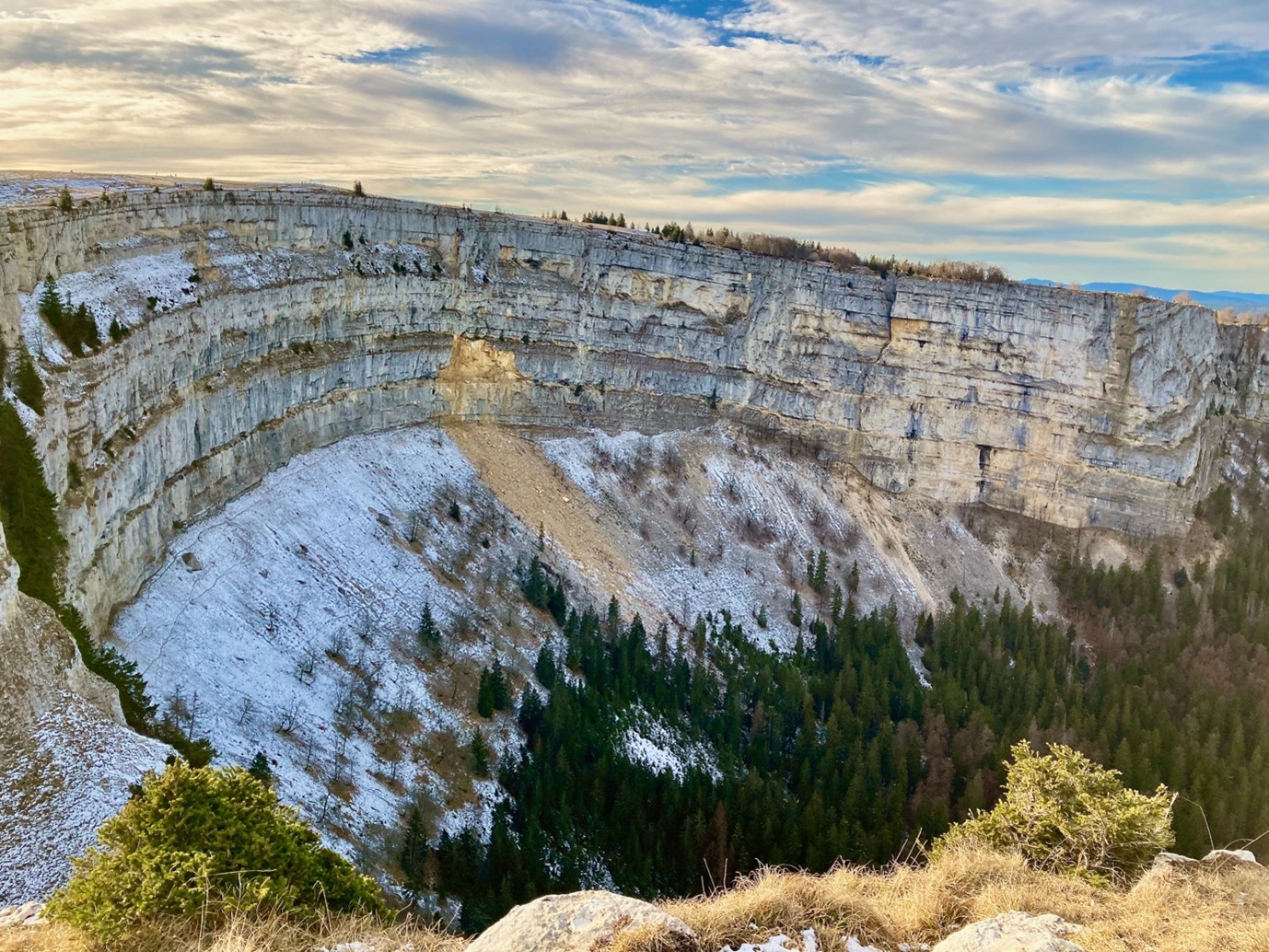
Credits: Thinkingoyster, CC BY-SA 4.0
The excursion
Departing from Neuchâtel by train at 09:13, we begin and end our hike in Noiraigue (09:34–16:25), following a loop through forest and open limestone terrain. The 12 km route, with 740 m of elevation gain, will be guided by the geobiologist Tomaso Bontognali and includes several stops for geological explanations. We reach the rim of the cirque around noon for a picnic lunch and panoramic views over the Swiss Plateau and, on clear days, the Alps. The return to Neuchâtel station is expected shortly before 17:00.
The trail does not present any technical difficulties; however, due to its length and elevation gain, it is a moderately strenuous hike. Participants should wear hiking shoes with a good treaded sole and bring a backpack with sufficient water, a packed lunch, and a waterproof jacket in case of changing weather conditions.
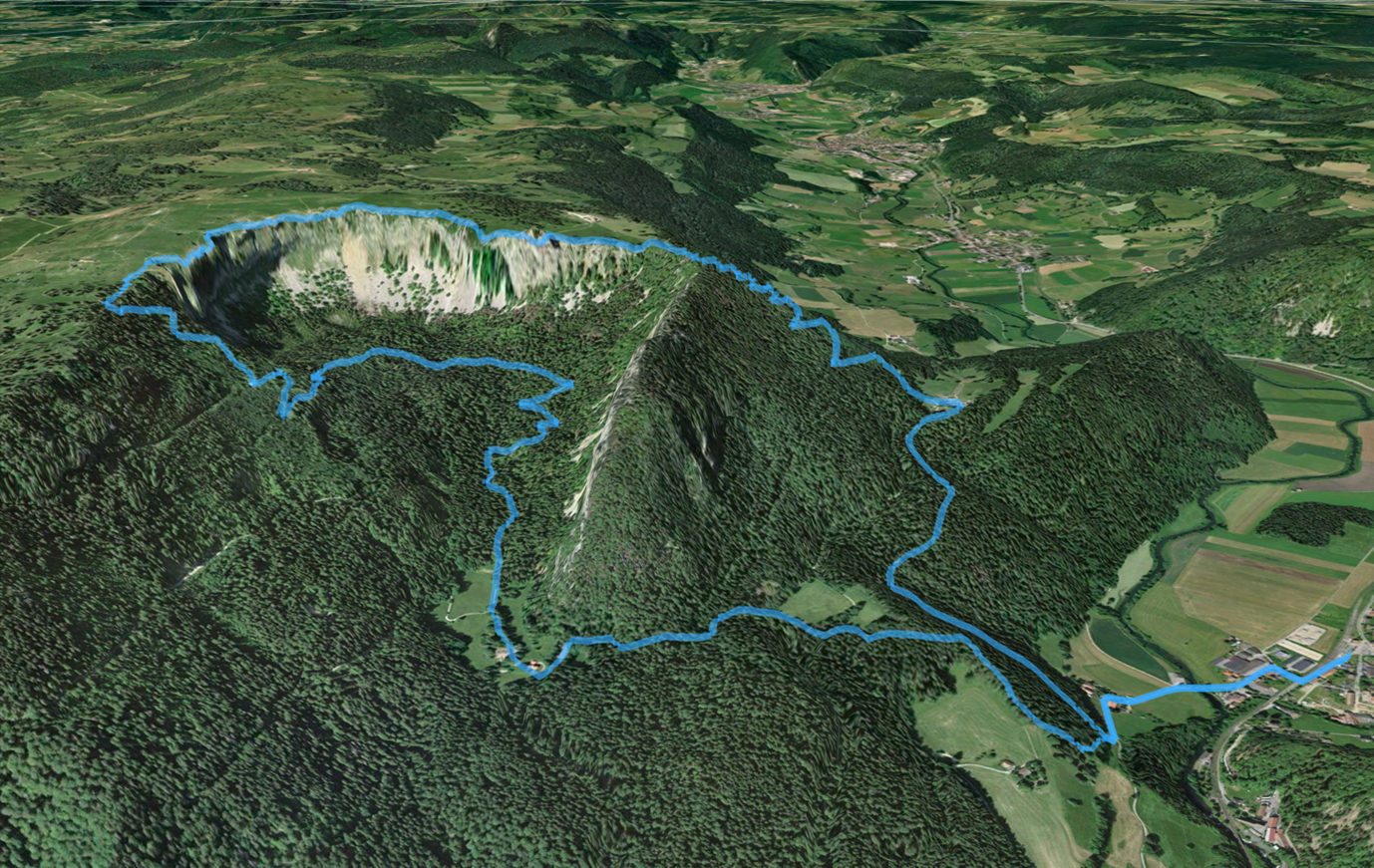
Credits: Google Maps / Space Exploration Institute